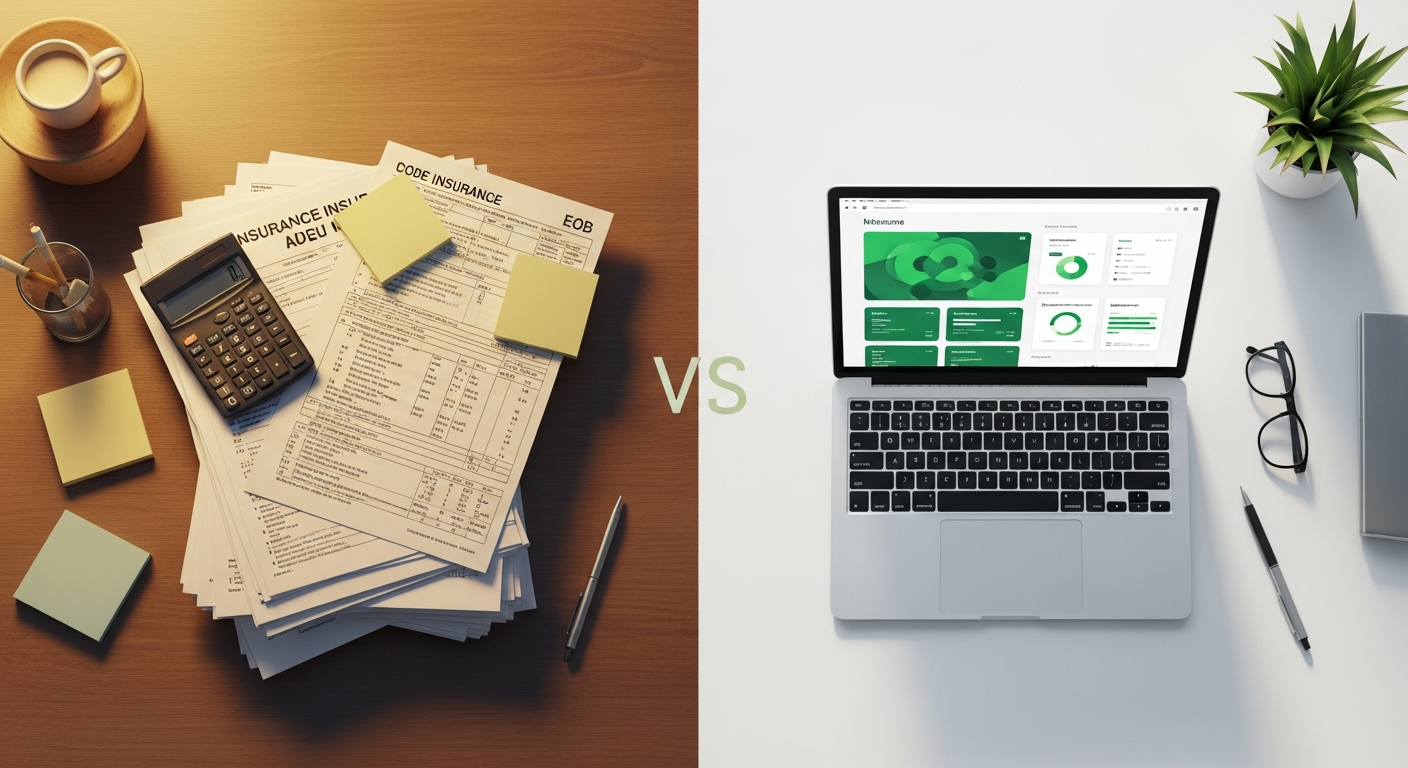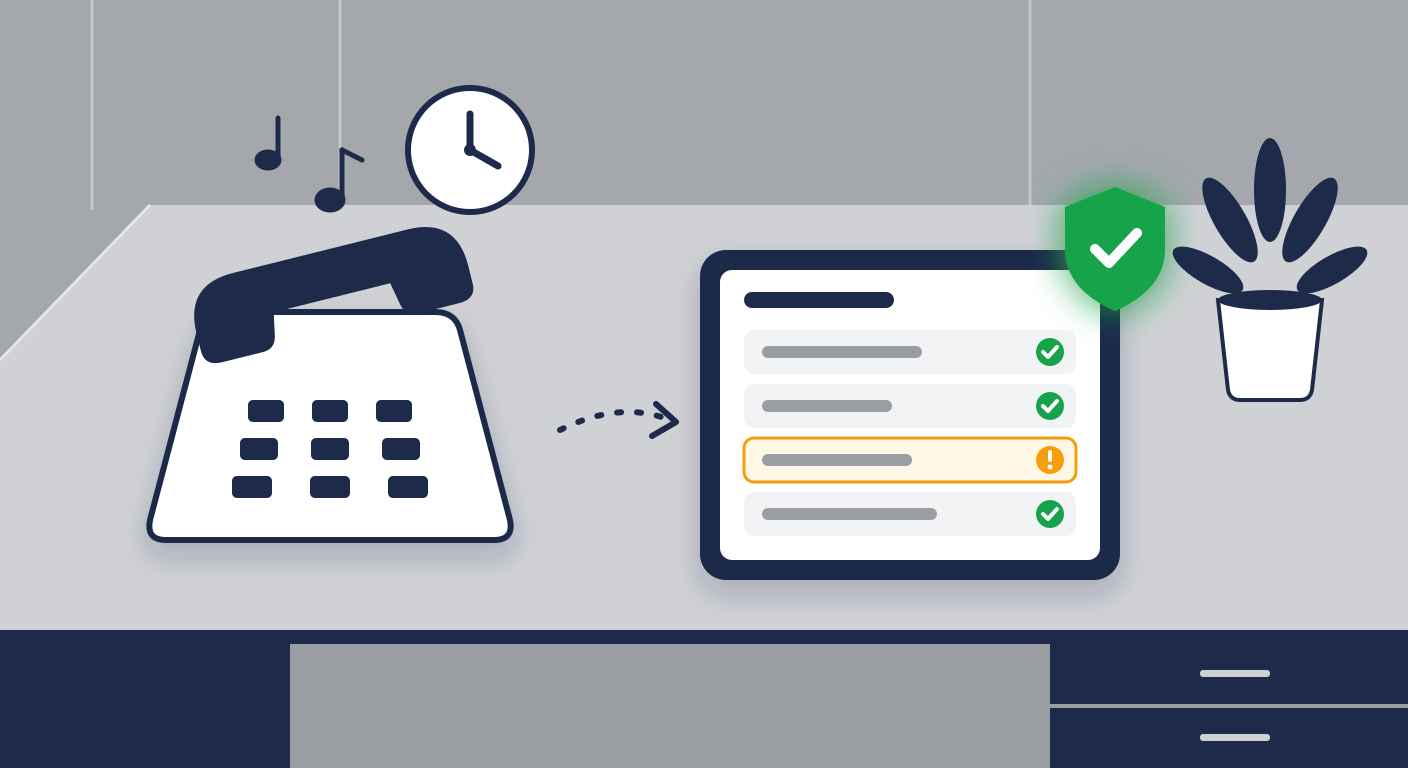
Walk into almost any dental office at 7:30 in the morning and you'll find someone at the front desk with a headset on, a payer portal open in one tab, and tomorrow's schedule open in another. They're verifying insurance. One patient at a time.
It's one of the least glamorous jobs in the practice. It's also one of the most important. Because when verification gets skipped or rushed, you find out at checkout — in front of the patient.
What verification actually looks like in most offices
For every patient on tomorrow's schedule, someone has to answer the same handful of questions:
Is the plan still active? What's the annual maximum, and how much is left? Has the deductible been met? What percentage does the plan cover for this procedure? When was the last cleaning, the last bitewings, the last fluoride — and are they due again, or will the claim get denied for frequency?
To get those answers, your team logs into a payer portal (a different one for every carrier, each with its own password), or calls the insurance company and waits on hold, or uses a separate verification tool that doesn't talk to your practice management software. Then they type what they found into the patient's chart.
Five minutes per patient if it goes well. Twenty if they end up on hold. Multiply that by a full schedule across multiple providers, and you've got a person whose entire morning is spoken for before the first patient walks in.
The real cost isn't the time
The time is bad enough. Five to ten hours a week of verification is common, and that's a real salary line.
But the expensive part is what happens when verification is wrong, stale, or skipped:
- The surprise at checkout. The patient was told their cleaning was covered. It wasn't — the plan terminated last month, or they already used their two cleanings this year at a previous office. Now your front desk has to have an awkward conversation, and the patient leaves annoyed.
- The denied claim. A frequency limit nobody caught means a denial 30 days later. Someone has to rework it, and half the time you end up writing it off.
- The treatment that didn't happen. When you don't know what's left on a patient's maximum, you can't give them a confident estimate. Patients who don't know what something will cost tend to say "let me think about it."
Every one of these goes back to the same root cause: the information existed, but nobody had it in front of them at the right moment.
Why it's still manual
Dental insurance data has been available electronically for years. So why is anyone still on hold?
Partly because the data is messy. Some payers return detailed breakdowns. Others return "active coverage" and not much else. Frequency history is especially inconsistent.
But mostly it's because verification lives in the wrong place. In most offices it's a separate tool, or a separate website, or a phone call — something your team does next to the practice management system instead of inside it. So even when the data comes back, someone still has to read it and re-type it.
What it should look like
Here's what I wanted when we built this into Ayla:
It runs on its own. Every patient with an upcoming appointment gets verified automatically, ahead of time, in a batch. Your front desk doesn't start the process — they walk in and it's already done. You choose how far in advance it runs.
The answers are in the chart. Maximums, deductibles, remaining benefits, coverage percentages, and frequencies land right in the patient's record, where the rest of your team can see them. No re-typing.
The schedule tells you who needs attention. Patients who couldn't be verified — plan terminated, payer didn't respond, data missing — get flagged on the schedule. Your team spends their time on the three patients with a problem instead of the forty without one.
It handles more than one plan. Primary and secondary insurance, with coordination of benefits, instead of verifying the primary and hoping for the best on the secondary.
It's connected to everything after it. Because verification lives in the same system as your treatment plans and claims, the estimate you give the patient and the claim you submit are working from the same information.
It's not magic. When a payer returns incomplete data, it still gets flagged for a human to check. But "check the handful of patients the system flagged" is a very different morning from "check everyone, by hand, on hold."
The goal is no surprises
Nobody got into dentistry to argue with insurance companies. And nobody on your front desk took the job hoping to spend their mornings on hold.
Verification should happen quietly in the background, before anyone thinks about it, so that when a patient sits down at checkout, the number you tell them is the number they pay.
Ayla's Complete plan includes automatic eligibility verification before every appointment, with coverage details right in the patient chart. Book a demo to see it in action.
Dr. Ninus Ebrahimi
Founder, Ayla · Pediatric Dentist
Practicing pediatric dentist and founder of Ayla. Building the dental software he wished existed — one feature at a time.