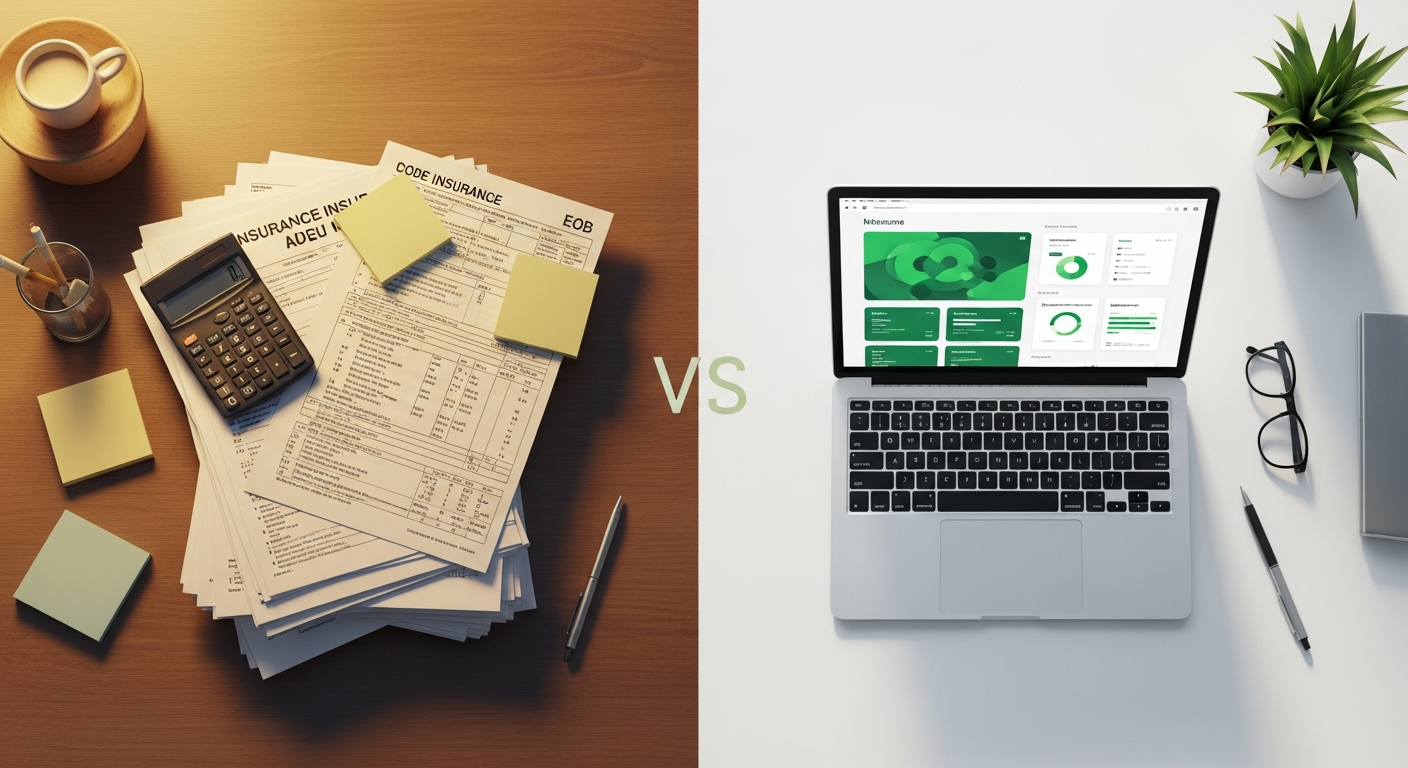
I watched my office manager spend three hours last Tuesday posting EOBs. Three hours. Sitting at a desk, flipping between a stack of papers and the computer screen, matching subscriber IDs, finding claims, typing in payment amounts, calculating adjustments. For three hours.
She's been doing this for years. Every week. And she's fast at it.
That's what finally pushed me to build something better.
Here's what EOB posting actually looks like in most offices
You get a stack of EOBs. Maybe they're paper, maybe PDFs from a payer portal, maybe a mix. Doesn't matter — the workflow is the same:
Pick up an EOB. Find the patient. Pull up their ledger. Find the claim. Look at what insurance paid. Look at the adjustment. Calculate the patient portion. Type it all in. Post it. Pick up the next one.
Each EOB takes 5-10 minutes if nothing goes wrong. When something doesn't match — wrong patient name format, missing claim, weird adjustment code — it takes longer. And something always doesn't match.
A busy practice processes 30-50 EOBs per week. Do that math and you're looking at 3-8 hours of someone's week gone. Every week. Forever.
Nobody talks about how expensive this is
At $25/hour (and good office managers cost more than that), you're spending $4,000-10,000 a year on a task that is literally just reading a piece of paper and typing numbers into boxes.
But the labor cost isn't even the worst part. The worst part is the errors. A miskeyed digit here, a payment posted to the wrong patient there, a missed contractual adjustment that throws off your A/R for weeks. I've seen it. You've seen it. Every dentist has seen a patient get billed incorrectly because someone fat-fingered an EOB at 4:30 on a Friday.
And the delays — when EOBs pile up for a few days because your team was busy with patients (you know, their actual job), patient statements go out late, and collections slow down. It's a domino effect that starts with a stack of paper on someone's desk.
So we built something
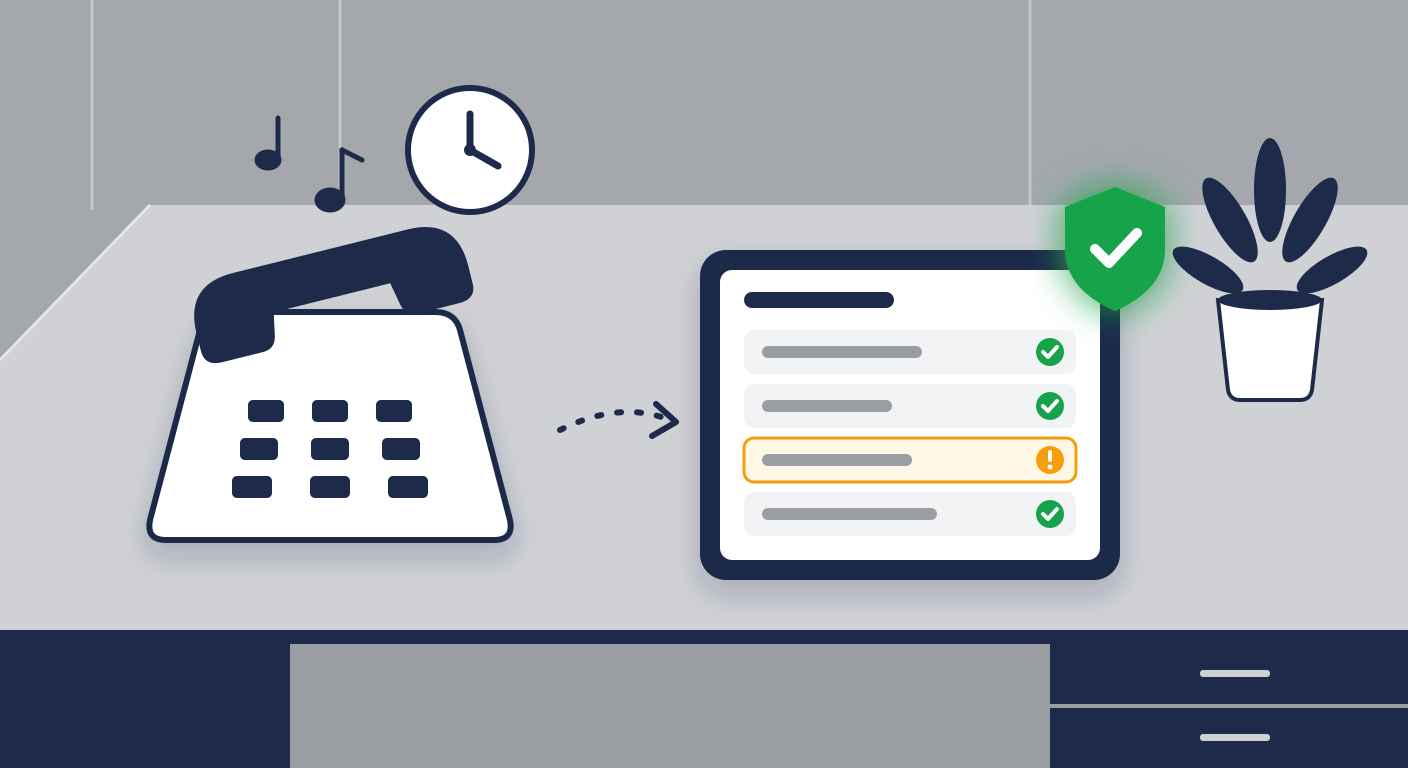
In Ayla, you scan the EOB or upload the PDF. That's it. That's your part.
The AI reads the document — doesn't matter what payer, what format. It finds the patient. It matches the claim. It pulls the payment amount, the adjustment, the patient responsibility. And it posts it to the ledger.
You review it, click confirm, done. What took 10 minutes takes 10 seconds.
No typing. No matching subscriber IDs by squinting at tiny text. No flipping between screens. No mental math on contractual adjustments.
If something doesn't match — wrong patient, can't find the claim, unusual adjustment — it flags it and asks you to look. It doesn't just post blindly and create a mess to clean up later.
"But we have ERA auto-posting"
I hear this a lot. ERAs cover some of your payments, sure. But not all payers send ERAs. And even when they do, plenty of EOBs still come as paper or PDF — especially from smaller payers, Medicaid in some states, and secondary insurance.
If your "automation" only handles ERAs, you're still manually posting a significant chunk of your payments. That's not automation. That's partial automation with a side of data entry.
What I actually wanted
I didn't want a fancy viewer that shows me the EOB data and then makes me type it in anyway. I wanted the software to do the entire job — read it, match it, post it — and only bother me when something was genuinely wrong.
That's what we built. And watching my office manager get those three hours back every week might be my favorite thing about Ayla so far.
Ayla includes AI-powered EOB scanning that reads, matches, and posts insurance payments automatically. Book a demo to see it in action.
Dr. Ninus Ebrahimi
Founder, Ayla · Pediatric Dentist
Practicing pediatric dentist and founder of Ayla. Building the dental software he wished existed — one feature at a time.